


01 .
Home
Why Are They So Emotional?
Helping Kids Navigate Anger, Fear, and Sadness
It can feel confusing, overwhelming, and sometimes even frustrating.
You might find yourself thinking, “Why is this such a big reaction?” or “How do I even handle this?”
The truth is, children experience emotions just as deeply as adults, sometimes even more intensely. But unlike adults, they don’t yet have the words, tools, or control to manage what they feel.
So those big emotions, anger, fear, sadness, don’t come out calmly. They come out loudly, quickly, and sometimes in ways that are hard to understand.
In this blog, we’ll explore how you can support your child through these moments by helping them name, feel, and regulate their emotions, with simple, realistic ways you can use at home.
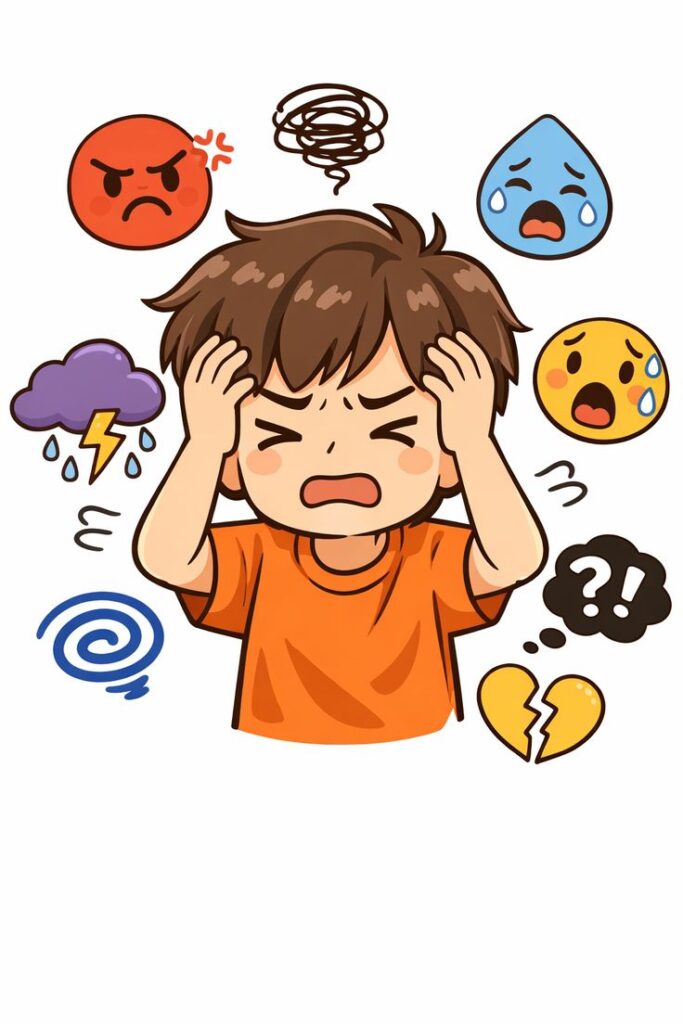
Why Big Feelings Feel So Big for Children
Children’s brains are still developing the ability to manage emotions.
The “feeling part” of the brain (which reacts quickly) is very active, while the “thinking part” (which helps calm down and make sense of things) is still growing. This means when a child feels something, especially something big, it can quickly take over.
That’s why:
- Anger may come out as hitting, shouting, or throwing things
- Fear may look like clinginess, avoidance, or tears
- Sadness may show up as withdrawal, silence, or irritability
Children are not overreacting, they are overwhelmed.
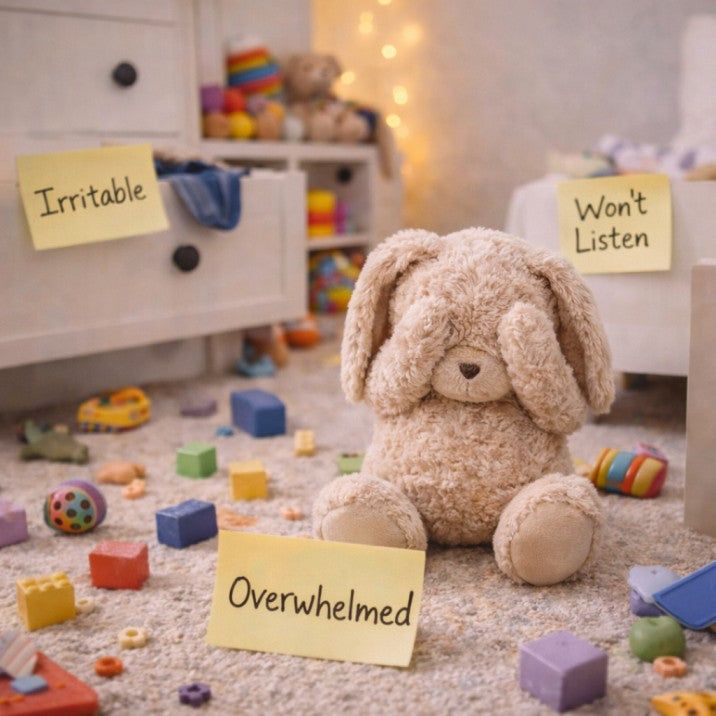
They don’t yet have the ability to pause and say,
“I feel frustrated because this didn’t go my way.”
Instead, their body reacts first, and their behavior follows.
This is where emotional literacy becomes important.
Emotional literacy means helping children:
- Recognize what they feel
- Put words to those feelings
- Learn safe ways to express and manage them
And this doesn’t happen automatically, it’s something children learn through you.
Everyday Examples
Big emotions show up in everyday moments more often than we realize.
For example:
- Your child throws a tantrum when a toy breaks, not just because of the toy, but because they feel frustration and loss.
- They refuse to go to school and cling to you, not because they’re being difficult, but because they feel anxious or unsure.
- They become quiet after a long day, not because nothing happened, but because they’re emotionally tired.
In these moments, the behavior we see is just the surface.
Underneath, there’s usually a feeling the child doesn’t yet understand or know how to express.
A helpful reframe is:
“This is not just behavior, this is communication.”
When we respond only to the behavior (“Stop crying,” “Don’t shout”), we miss the opportunity to support what’s happening inside.
Practical Strategies
Supporting your child’s emotions doesn’t mean stopping the feeling, it means helping them move through it safely.
Here are simple, effective ways to do that:
1. Label the Emotion
Children need help putting words to what they feel.
Try saying:
- “It looks like you’re feeling really angry.”
- “I can see that made you sad.”
- “That felt scary for you, didn’t it?”
This helps your child connect their internal feelings to a word.
2. Validate the Feeling
Validation doesn’t mean agreeing with behavior, it means acknowledging the emotion.
Try saying:
- “That makes sense. That was hard.”
- “I understand why you feel upset.”
- “Anyone would feel frustrated in that situation.”
This helps your child feel seen and understood.
3. Co-Regulate (Calm Together)
Children don’t learn to calm down alone, they learn through calm adults.
In the moment:
- Lower your voice
- Sit beside them
- Offer gentle physical comfort (if they’re open to it)
Try saying:
- “I’m here with you.”
- “We’ll get through this together.”
- “Let’s take a deep breath slowly.”
Your calm becomes their calm.
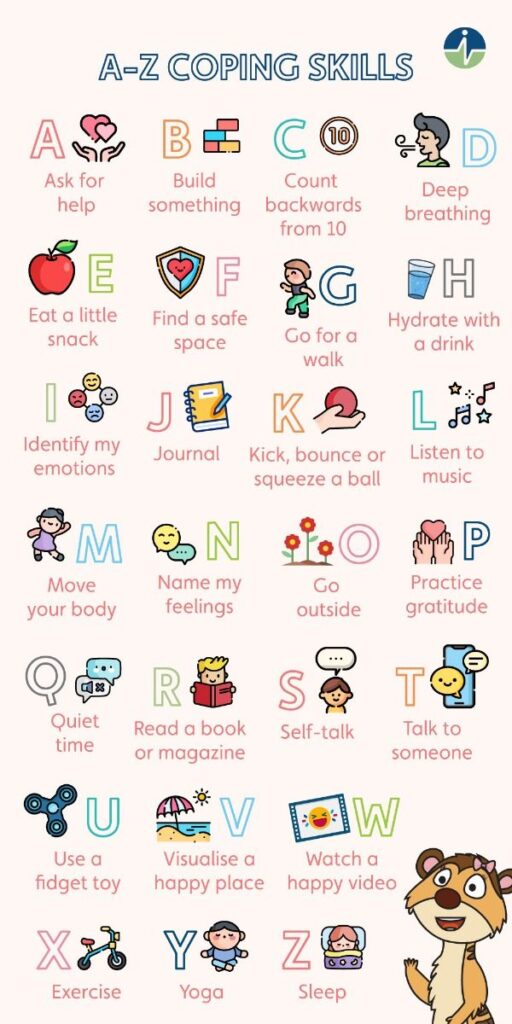
4. Offer Simple Regulation Tools
Once your child feels seen, you can guide them gently.
Try:
- Deep breathing (“Smell the flower, blow the candle”)
- Hugging a pillow
- Taking a short break in a quiet space
- Drinking water
Keep it simple, too many options can be overwhelming.
5. Teach After the Moment (Not During)
When your child is calm, you can gently reflect.
Try saying:
- “Earlier, you felt really angry when your toy broke.”
- “Next time, we can try asking for help or taking a break.”
This helps build long-term emotional skills.
Encouragement & Reflection
Helping your child understand and manage emotions is not a one-time lesson, it’s a process that unfolds slowly over time.
There will be messy moments. Loud moments. Tearful moments.
That doesn’t mean something is going wrong.
It means your child is learning.
Every time you pause instead of react…
Every time you name a feeling instead of dismissing it…
Every time you stay calm when things feel big…
You are teaching your child something powerful:
Emotions are safe. Emotions can be understood. Emotions can be managed.
The next time your child has a big reaction, try to look beyond the behavior and ask:
“What might they be feeling right now?”
That small shift can change everything.
And remember, you don’t have to do it perfectly. Just being present, patient, and willing to understand is already enough.

Programmes
Support Services
© 2026 IMPACT. All rights reserved