


01 .
Home
The Therapeutic Power of Pretend Play
Why role-play is important, not immature.
Have you ever seen your child pretending to run a school, or saving the world with a cardboard sword? To adults, it might look like mere play, but to a child, it’s an entire emotional landscape, a safe space to explore fears, friendships, and feelings.

Pretend play isn’t just “cute” or “childish.” It’s a deeply meaningful form of self-expression and problem-solving. Through imagination, children make sense of what they experience, whether it’s a trip to the doctor, a disagreement with a friend, or learning about kindness.
Pretend play helps children develop key emotional and cognitive skills. When a child steps into another role, a doctor, a teacher, a parent, or a superhero, they’re not only using imagination; they’re practicing empathy and problem-solving, hence seeing the world from another perspective. For example, a child playing “teacher” learns what it feels like to be responsible for
others. A child pretending to be “hurt” might be processing a time they felt scared or vulnerable.
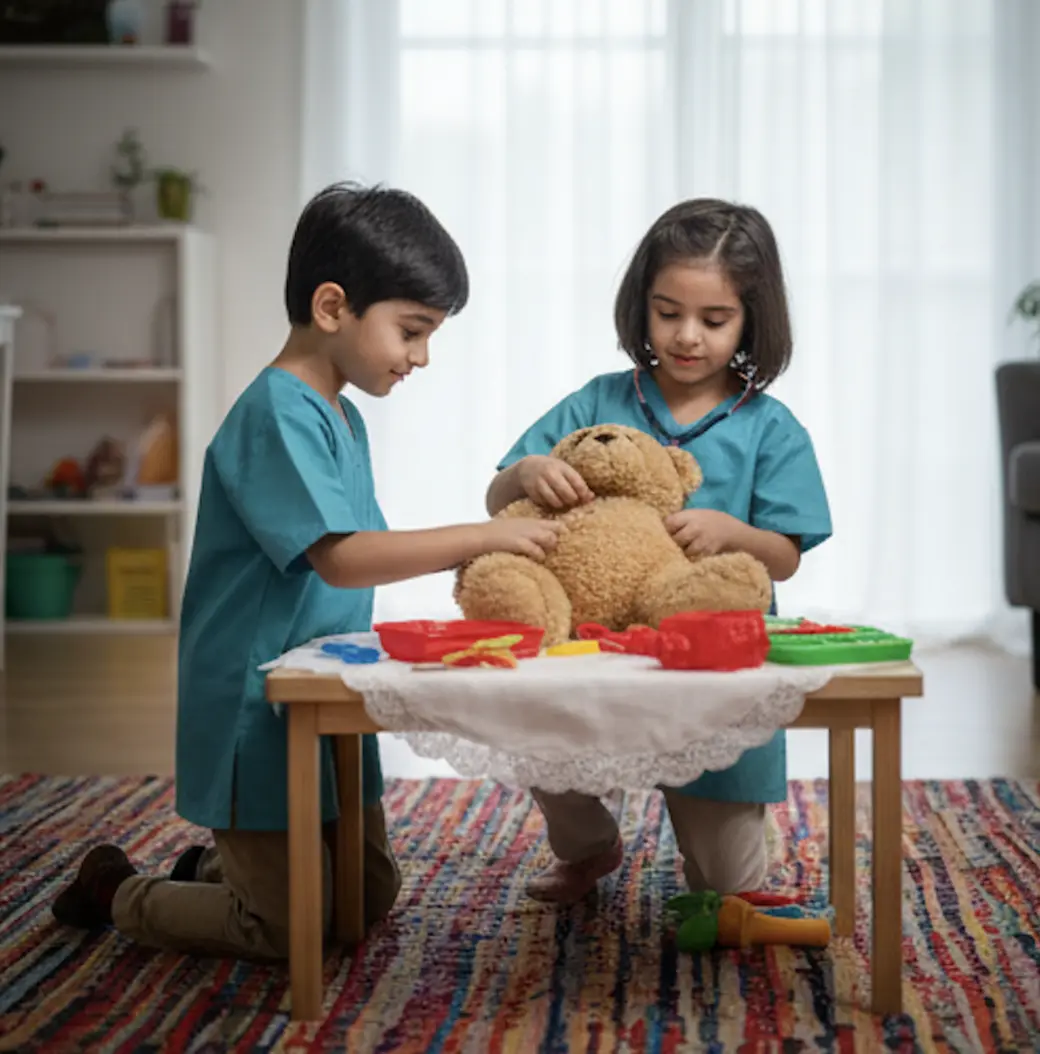
From a therapeutic point of view, this form of play allows children to project internal emotions outward, making them easier to understand and manage. It’s especially valuable for kids who may not yet have the words to describe what they feel. Play therapists often use role-play scenarios to gently explore themes of control, loss, fear, and connection, but the beauty is, children naturally do this on their own every day.
You might notice your child playing “hospital” after a doctor’s visit, or acting out “school” after a tough day in class. These aren’t random games, they’re emotional replays. In these moments, your child is working through anxiety, rehearsing confidence, or asserting control in a safe, predictable way. For example, after watching a scary movie, they might play “monster hunter,”
turning fear into courage.
Recognizing the emotional purpose behind play helps adults support it, not interrupt it. What looks like “nonsense talk” is actually therapy in motion. Encouraging pretend play nurtures not only creativity but also emotional regulation, empathy, and social understanding.
To become more involved with your child at home:
- Offer open-ended toys like dolls, blocks, or kitchen sets, anything that sparks imagination.
- Join occasionally, but let the child lead the story.
- Avoid correcting their fantasy; instead, ask questions like, “What happens next?” or “How does your friend feel?”
- Reflecting emotions: “I see your superhero is helping sick animals, that’s very kind.”

So understand that pretend play isn’t about escaping reality, it’s how children understand it.
When they create worlds, they’re also creating meaning and hope.
So next time you hear your child chatting with an invisible friend or assigning you the role of “dragon” in their story, smile and step into their world. You’re not just playing, you’re joining them in the safest, most natural form of therapy they know.
Because in the world of pretend, every emotion can find its place, and every story can end in healing.

Programmes
Support Services
© 2026 IMPACT. All rights reserved